“My eyesight is fine, I don’t need to see an ophthalmologist.” This is one of…
Neuro-ophthalmology: diagnosis and treatment of vision disorders of neurological origin
At INOF, we treat neurological conditions that can affect vision and the visual pathway. Our approach combines a detailed ophthalmological examination, advanced diagnostic tests and specialist follow-up to identify the cause of symptoms and provide the most appropriate treatment for each individual case.
Early detection is crucial: some neuro-ophthalmological conditions can progress rapidly and significantly affect visual function.
Book an appointment
If you experience vision loss, double vision, changes in your visual field, eye pain with movement or changes in your pupils, request a neuro-ophthalmological assessment at INOF.
What is neuro-ophthalmology?
Neuro-ophthalmology is the speciality that studies the relationship between the visual system and the nervous system. It deals with the diagnosis, treatment and follow-up of conditions affecting the optic nerve, the visual pathway, eye movements and pupillary function.
Many visual disturbances do not originate solely in the eye, but also in neurological structures involved in the transmission and interpretation of visual information. Therefore, a specialist assessment allows for a more accurate diagnosis.
Symptoms requiring neuro-ophthalmological assessment
Neuro-ophthalmological conditions can present in a wide variety of ways. The most common symptoms include:
- Sudden or gradual loss of vision in one or both eyes.
- Diplopia or double vision.
- Visual field defects.
- Difficulty moving one or both eyes properly.
- Nystagmus or rapid, involuntary eye movements.
- Changes in pupil size or response.
- Pain with eye movements.
- A sensation of visual misalignment or recently developed strabismus.
If any of these signs are present, it is important to carry out a full examination to determine whether there is an associated neurological or ocular cause.
Optic nerve disorders
The optic nerve is the structure responsible for transmitting visual information from the retina to the brain. When its function is impaired, vision loss, changes in colour perception or visual field defects may occur.
Optic neuritis
Optic neuritis is an inflammation of the optic nerve that usually causes vision loss, often with a sudden onset, and may be accompanied by pain when moving the eye. It may be related to autoimmune, inflammatory or infectious processes. In many cases, vision improves, although specialised diagnosis and follow-up are required.
Optic neuropathies
We refer to optic neuropathy when the optic nerve is affected by causes other than acute inflammation. Among the most significant are:
- Traumatic optic neuropathy, resulting from physical trauma.
- Compressive optic neuropathy, associated with lesions that compress the visual pathway.
- Ischaemic optic neuropathy, related to vascular abnormalities.
- Nutritional or metabolic deficiencies.
- Hereditary or genetically caused optic neuropathies.
In some cases, optic atrophy may occur, characterised by a pale appearance of the optic nerve, which can permanently affect visual acuity and the visual field.
Papilloedema
Papilloedema is swelling of the optic nerve caused by increased intracranial pressure. Its detection is particularly important, as it may be linked to conditions requiring urgent investigation and coordination with other medical specialities.
Eye movement disorders
Neuro-ophthalmology also addresses disorders of the muscles and nerves responsible for eye movement. When these mechanisms are affected, double vision, difficulty aligning the eyes or newly developed strabismus may occur.
Depending on the cause and progression, treatment may include observation, prisms in spectacles, drug therapy, neuromodulators or surgery on the eye muscles.
Pupillary abnormalities
Changes in the size or response of the pupils can provide highly relevant information about the condition of the visual pathway and the nervous system. Some changes are minor, but others may indicate conditions requiring rapid diagnosis.
- Anisocoria: a difference in size between the two pupils.
- Afferent pupillary defect: a reduced pupil response to direct light stimulation.
- Pupillary reactivity abnormalities associated with neurological or ophthalmological conditions.
Diagnosis and follow-up at INOF
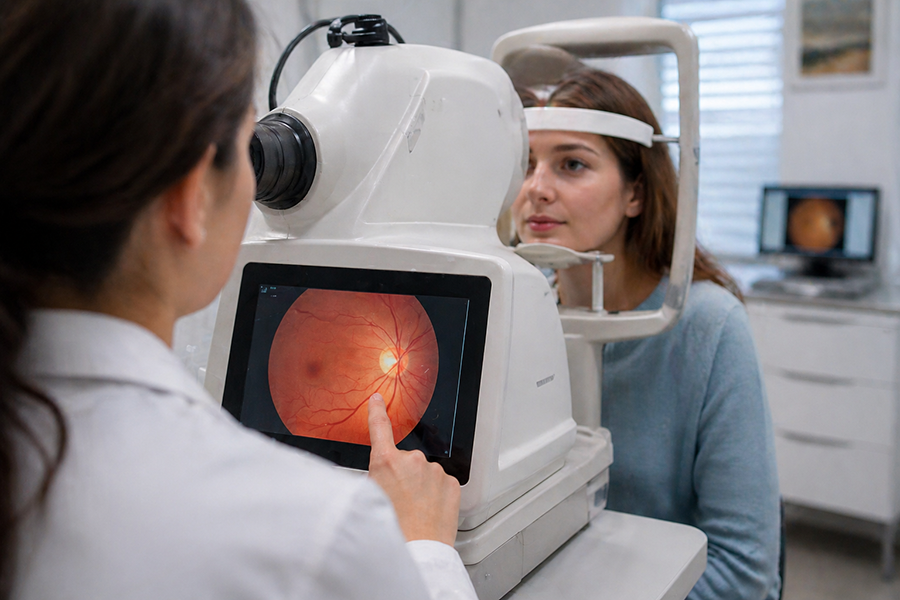
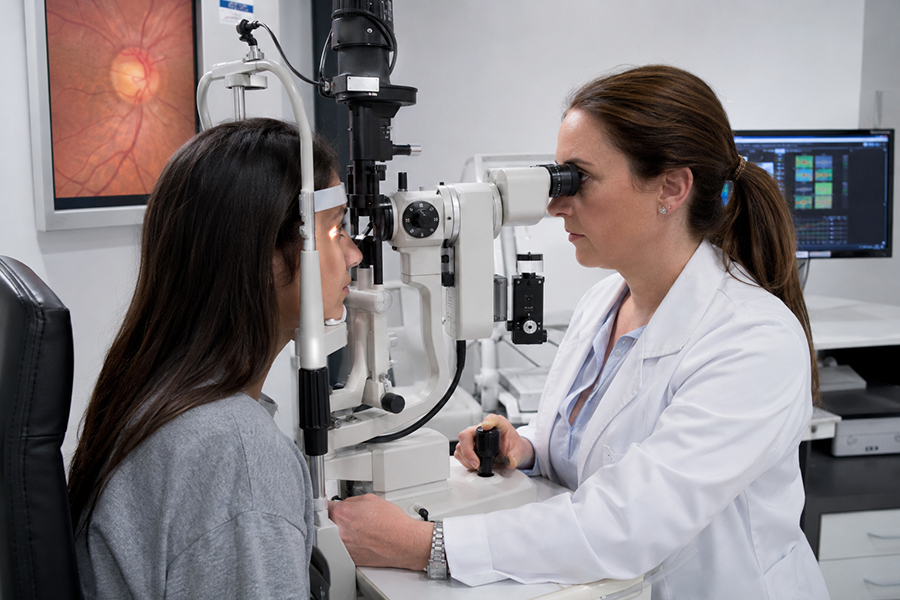
At INOF, we carry out a comprehensive assessment to identify the cause of visual symptoms. The examination may include testing of visual acuity, visual field, eye movement, pupillary reflexes, the fundus, and additional tests as required for each case.
Our aim is to establish an accurate diagnosis, initiate appropriate treatment where necessary, and provide personalised follow-up to preserve visual function and reduce the risk of recurrence.
Neuro-ophthalmological treatment
Treatment depends on the specific cause of the condition. Some conditions require medical treatment, others close monitoring, and in certain cases, specific procedures such as prisms, neuromodulator injections or eye muscle surgery.
Each case must be assessed individually. That is why, at INOF, we tailor the treatment plan to the condition, the clinical progression and the visual needs of each patient.
Book an appointment
If you have a neurological diagnosis that may affect your vision, or if you are experiencing symptoms such as double vision, loss of vision, pupil abnormalities or visual field defects, book a neuro-ophthalmology consultation at INOF.
Temas relacionados