
Lazy eye or amblyopia is the partial loss of vision in one of the eyes…
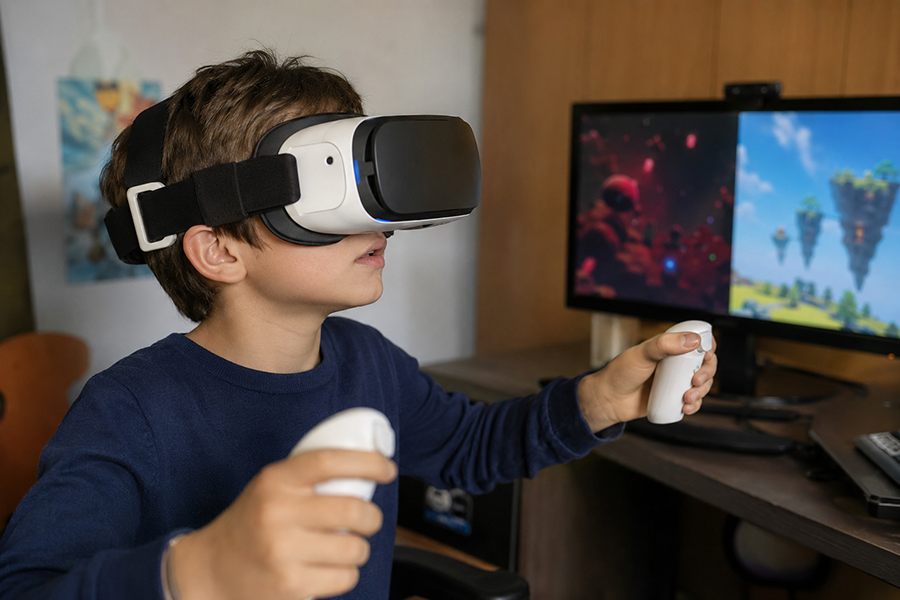
Goodbye (or almost) to the eye patch: 3D video games that retrain the lazy eye
For decades, the go-to treatment for lazy eye (amblyopia) has been to cover the healthy eye with a patch to force the weaker eye to work. It works, but it has a weakness: it relies on many hours of wear, which is often uncomfortable for the child, and it fails to address the most important aspect: getting both eyes to work together.
This is where a different and promising approach comes in: binocular or dichoptic therapy. Instead of blocking out one eye, it presents each eye with a different but complementary image, so that the task — usually a video game — can only be completed if the brain combines the information from both eyes. The weaker eye is shown the part with the highest contrast or the most dynamic movement, to overcome the brain’s tendency to ignore it.
In Spain, the Dicopt solution uses virtual reality glasses and video games to train binocular vision, reducing the number of hours spent wearing an eye patch and even preventing the child from having to wear it to school. International solutions such as Vivid Vision follow a similar philosophy and are medically certified. Amblyopia is the most common vision problem in childhood (in Spain, around 15,000 children are diagnosed each year), and this type of therapy stands out for one crucial reason: it engages the child, who becomes more committed to the treatment.
It is worth noting that the scientific community is still calling for more extensive studies to confirm the extent to which they can replace the patch, and that recovery is faster the sooner treatment begins. But the outlook is promising, even for some adults.
Temas relacionados