
Holding your mobile phone further away to read a message. Needing more light to read…
The treatment of strabismus enters the 21st century
Strabismus — a condition in which the eyes do not focus on exactly the same point — affects approximately 3% of the population and, contrary to popular belief, can be treated at any age, even in newborns. The good news is that the methods for correcting it have advanced significantly in recent years.
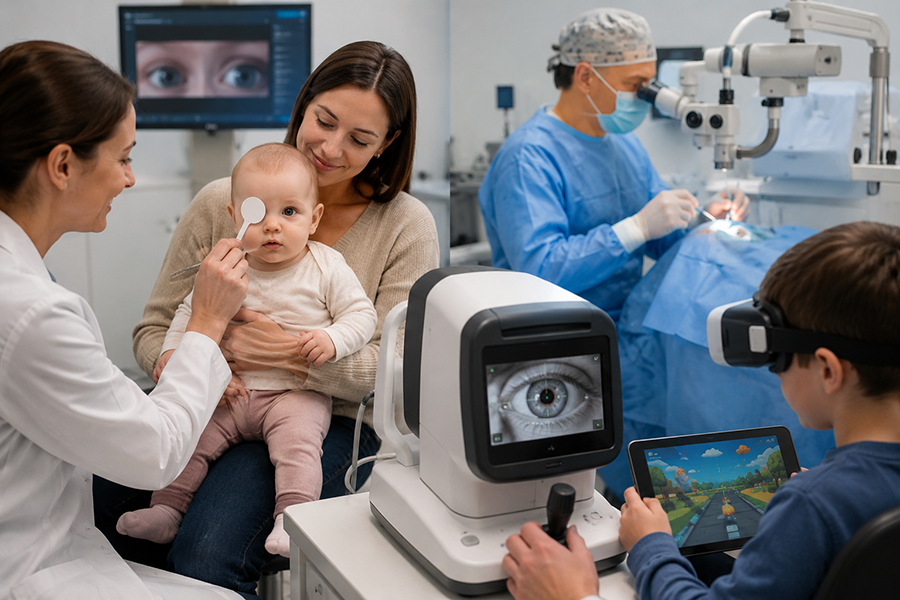
In the field of surgery, minimally invasive techniques and assisted surgery allow the eye muscles to be realigned with greater precision and reduce recovery times. Alongside surgery, botulinum toxin has established itself as a very useful alternative in certain cases, particularly in children with strabismus from birth, where intervention in the first few months of life is crucial.
Diagnosis has also taken a leap forward. Video-oculography systems based on infrared cameras measure eye deviation objectively and with great precision, requiring minimal cooperation from the patient—something particularly valuable in very young children. And visual therapy increasingly relies on digital applications and virtual reality, which make treatment more bearable and allow for closer monitoring.
The message for families is clear: the earlier it is detected, the better. An early eye examination remains the best tool for protecting vision.
Temas relacionados