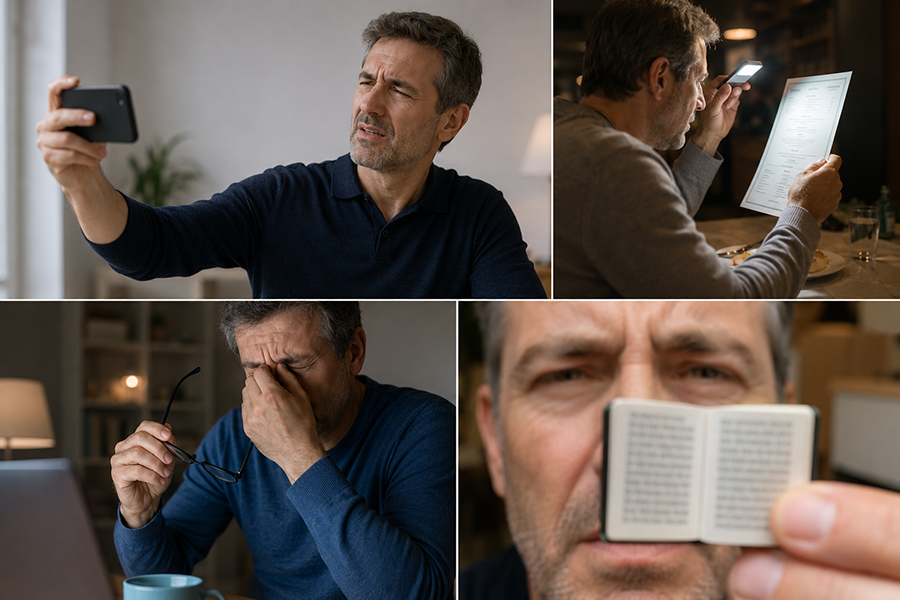
Holding your mobile phone further away to read a message. Needing more light to read…
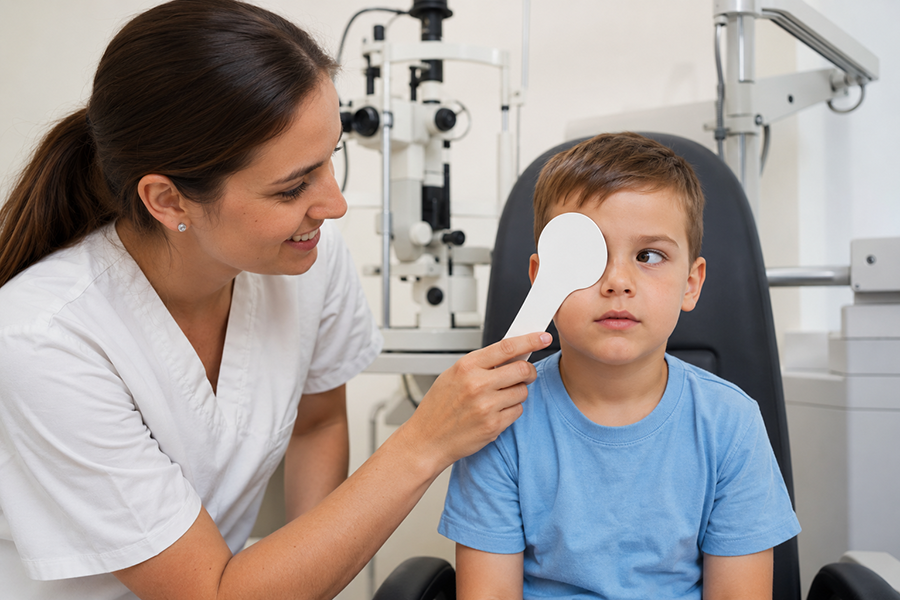
Strabismus: Why It’s Not Just “A Wandering Eye” and When to See an Ophthalmologist
Strabismus is one of the most common reasons for seeking ophthalmological care, especially in children. It is often perceived as a purely cosmetic problem—“a wandering eye”—but in reality, it is much more than that: when the two eyes do not focus on the same point, the brain receives two different images and has to “choose.” That choice, if not corrected in time, can have lasting consequences on vision.
What exactly is strabismus?
We speak of strabismus when the visual axes of both eyes are not aligned: while one eye focuses on an object, the other deviates inward, outward, upward, or downward. This deviation may be constant or occur only at certain times—when the person is tired, ill, or focusing on something up close.
It is not exclusively a childhood problem. Although most cases are detected in the early years of life, it also occurs in adults, either as a recurrence of childhood strabismus or as a new condition associated with other causes.
Why It’s Important to Treat It and Not “Wait to See If It Corrects Itself”
In children, the main risk of untreated strabismus is amblyopia—commonly known as “lazy eye.” If the brain learns to ignore the image from the deviating eye to avoid double vision, that eye stops developing its visual ability. And the window of opportunity to correct it is limited: the sooner action is taken, the better the results.
In adults, newly developed strabismus can cause very disabling double vision and, at times, signal a problem that warrants further investigation. That is why it should never be dismissed as merely “cosmetic.”
Warning signs: when to make an appointment
- An eye that visibly turns away, even if only intermittently.
- A child who closes or covers one eye, tilts their head, or gets very close to objects.
- New-onset double vision in an adult.
- Frequent headaches or eye strain when reading or using screens.
- Family history of strabismus or “lazy eye.”
What treatments are available today
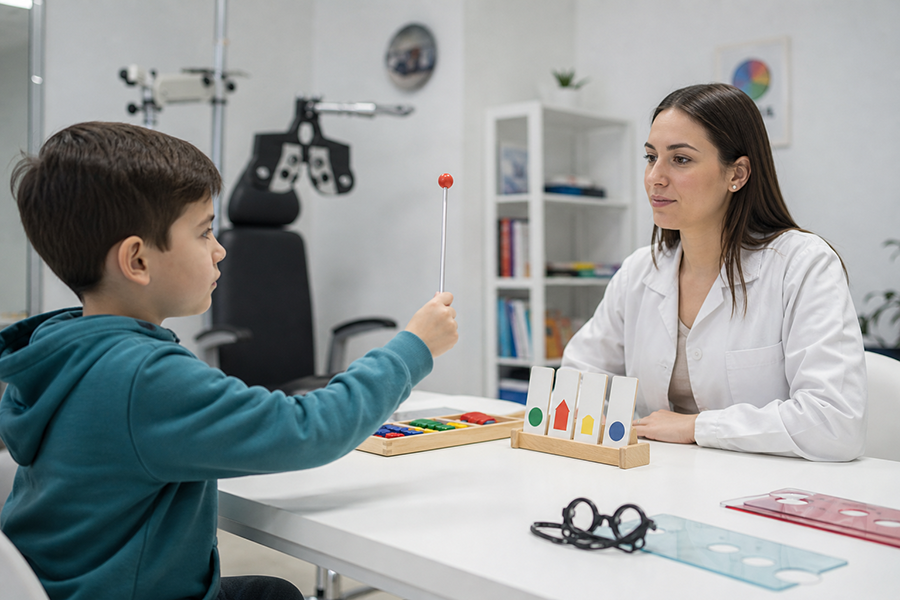
Treatment depends on the type of strabismus, the patient’s age and the underlying cause. Several options are available today, which are often combined: optical correction with glasses, visual therapy and eye patches to treat a lazy eye, and, where indicated, surgery to reposition the muscles that move the eye. In adults, strabismus surgery can also significantly improve both vision and quality of life.
The key in all cases is an individualised diagnosis: no two cases of strabismus are the same, and the treatment plan must be based on a comprehensive examination.
At the INOF Institute
At the INOF Institute, we assess every case of strabismus — in both children and adults — with a detailed examination and design a bespoke treatment plan. If you have noticed that your child’s eye is turning inwards, or if you yourself have started to see double, don’t ignore it: an early assessment makes all the difference.
Book your appointment at www.inof.es or give us a call. We’ll be delighted to help you.
Temas relacionados