Childhood myopia has become one of the major issues in modern ophthalmology, and not by…

Childhood myopia: the silent epidemic that can now be brought under control
Myopia in children is increasing at a rate that is causing concern among specialists. Estimates suggest that, if this trend continues, half the world’s population could be short-sighted by 2050. It is not just a matter of glasses: high myopia increases the risk of serious complications in adulthood, such as retinal detachment, glaucoma or macular damage. That is why the aim of treatments is not to cure — myopia cannot be reversed — but to slow its progression.
What works?
The most recent evidence, compiled in scientific reviews from 2025, highlights several strategies that can be combined and must be tailored to the individual. Low-dose atropine eye drops, applied at night for a couple of years, help to slow down excessive eye growth. Myopia control lenses and glasses, featuring peripheral defocus technologies, have shown in recent data that prolonged use maintains the effect over time, and that combining them with atropine can yield even better results. In selected cases, orthokeratology (night-time lenses) is used, and an emerging option is low-level red light therapy, which is still under evaluation.
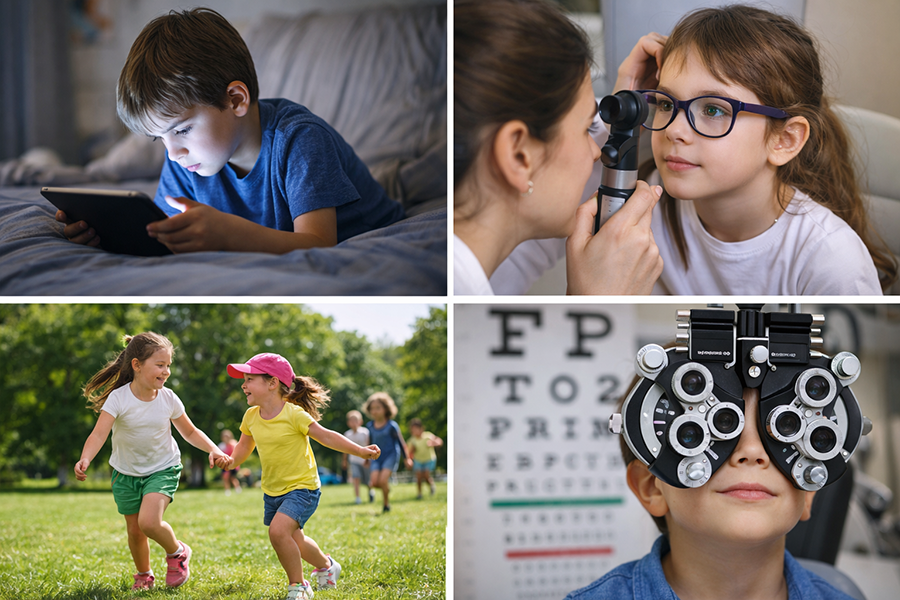
And there is something that costs nothing and is strongly backed by science: spending more time outdoors and doing less close-up work without taking breaks. Natural light stimulates the release of dopamine in the retina, which helps to slow down the elongation of the eye. A practical recommendation for home and school: frequent breaks and plenty of time spent playing outdoors. And, of course, an annual eye test for young children.
Temas relacionados