The intensive use of digital devices has become a constant feature of everyday life, both…
Personalised visual therapy for children and adults
What is visual therapy?
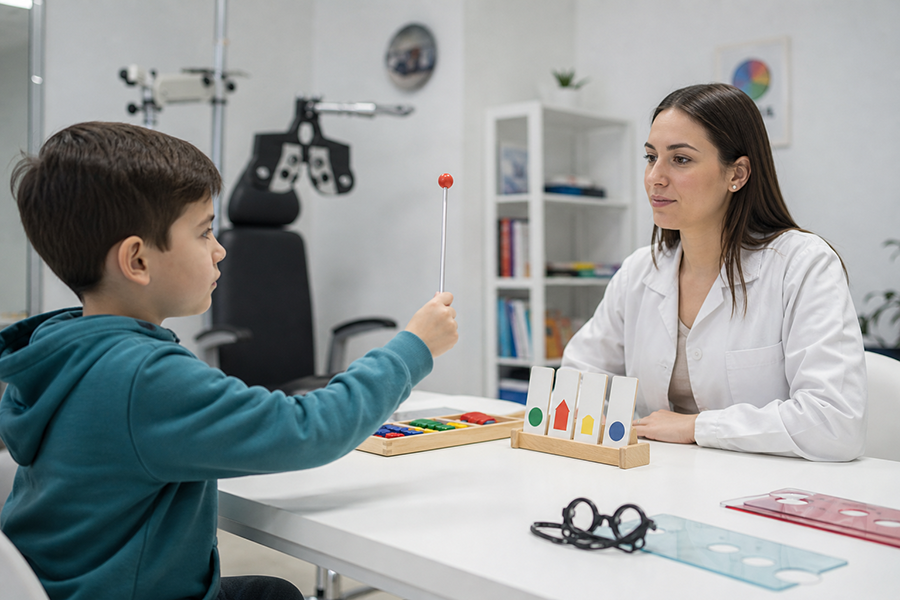
Visual therapy is a non-surgical treatment that trains the coordination between the eyes and the brain. Its aim is not just to help you see well, but to ensure you can see comfortably, efficiently and effortlessly in your day-to-day life.
It is based on personalised programmes that combine active exercises (patient participation) and passive exercises (use of glasses, prisms or filters), tailored to each individual case.
Who is it suitable for?
👶 Children
Visual therapy is particularly useful for children with vision-related learning difficulties.
Warning signs:
- Gets tired when reading or avoids doing so
- Loses their place or uses their finger
- Poor reading comprehension
- Lack of concentration
- Headaches
Benefits:
- Improves reading
- Increases concentration
- Boosts confidence and academic performance
👩💻 Adults
Suitable for people with high visual demands (screens, reading, driving).
Common symptoms:
- Eye strain
- Blurred vision
- Difficulty focusing
- Headaches
Benefits:
- Greater visual comfort
- Less eye strain
- Improved work performance
What does the treatment involve?
The treatment combines:
- Exercises at the clinic with a specialist
- Home exercises to reinforce progress
- Personalised follow-up
The duration varies from case to case, but the results are usually gradual and long-lasting.
Where to start?
- Consultation with an ophthalmologist to rule out any medical conditions
- Comprehensive assessment with a specialist optometrist
- Design of a personalised visual therapy plan
In which cases is it recommended?
- Amblyopia (lazy eye)
- Strabismus
- Convergence and divergence problems
- Double vision (diplopia)
- Digital eye strain
- Vision-related learning difficulties
Start today
Good vision improves your quality of life.
With a personalised assessment, we can help you achieve it.
Temas relacionados