At INOF, we treat neurological conditions that can affect vision and the visual pathway. Our…
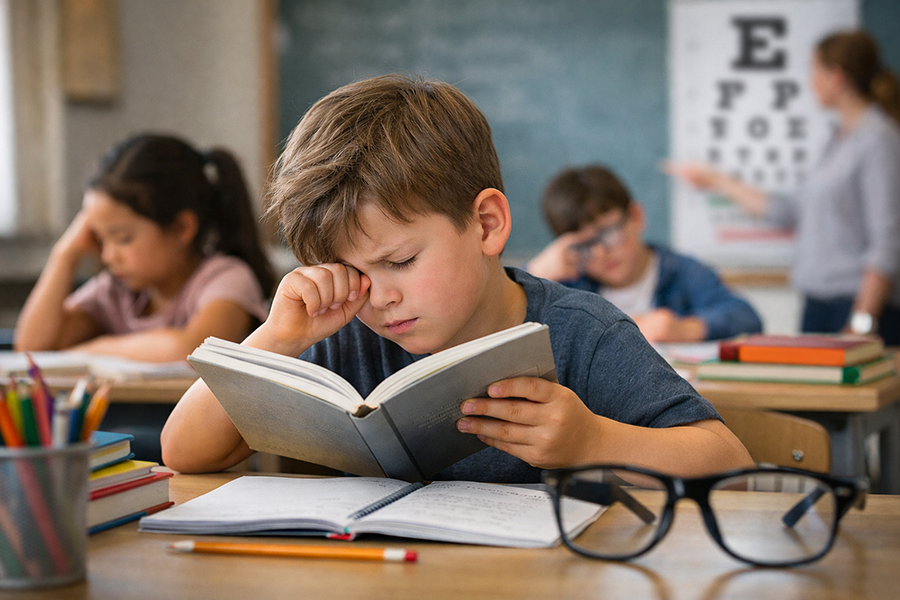
Children’s visual health and its impact on school performance
Eye health plays a fundamental role in learning. It is estimated that between 70% and 80% of the information children receive in the classroom comes through their eyes, so any visual problem can directly affect their academic performance.
However, many visual disorders go unnoticed for years because children are not always aware that they cannot see well.
Among the most common visual impairments in school-age children are myopia, hyperopia, astigmatism, amblyopia or “lazy eye” and strabismus.
It is estimated that around 25% of school-age children have some kind of vision problem, which can affect their ability to read, write or follow explanations in class.
When a child does not see properly, they may have difficulty reading or copying from the blackboard, lack of concentration, headaches or eye strain, and low interest in reading or homework.
Various studies estimate that up to 30% of cases of poor school performance could be related to undiagnosed vision problems.
Specialists recommend regular eye tests during childhood, even when the child shows no symptoms. Early detection of a vision problem allows for appropriate treatment and prevents difficulties in academic and social development.
Temas relacionados