
A child’s overall development is closely linked to the proper development of their visual system…
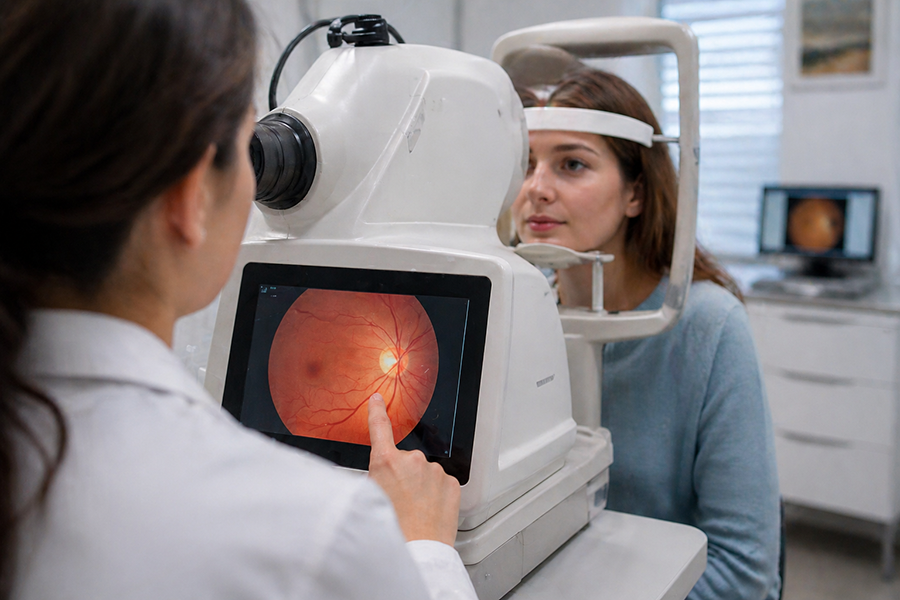
Retinal detachment: how to spot it early and prevent vision loss
Retinal detachment is an ophthalmological emergency that can lead to irreversible vision loss if not treated promptly. Recognising the symptoms and acting quickly is key to preserving your eyesight.
Who is most at risk?
Although it can affect anyone, it is more common in:
- People with short-sightedness, particularly severe short-sightedness
- Patients with diabetes
- Those with a history of eye trauma
- People who have had cataract surgery (to a lesser extent)
Warning signs
There are characteristic symptoms that require immediate attention:
- Floaters (myodesopsia): moving spots in your vision
- Flashes of light (photopsia): flashes even with the eyes closed
- Shadow or ‘black curtain’: loss of peripheral vision progressing towards the centre
If you experience any of these signs, it is essential to see an ophthalmologist immediately.
Urgent and specialist treatment
Treatment for retinal detachment is surgical and, in many cases, must be performed within the first 24 hours. The speed of action has a direct impact on the visual prognosis.
Current techniques, such as vitrectomy, have significantly improved safety and outcomes, allowing vision to be restored even in complex situations. However, success depends largely on early diagnosis and the experience of the medical team.
The importance of acting promptly
Not all retinal detachments begin with severe vision loss, so ignoring the early symptoms can have serious consequences. An immediate assessment allows us to intervene before the damage becomes irreversible.
At INOF – Dr Fernández Agrafojo, we have retina specialists and an emergency department dedicated to the diagnosis and treatment of retinal detachment.
If you notice sudden changes in your vision, seek an eye examination without delay. Acting promptly can make all the difference.
Temas relacionados