
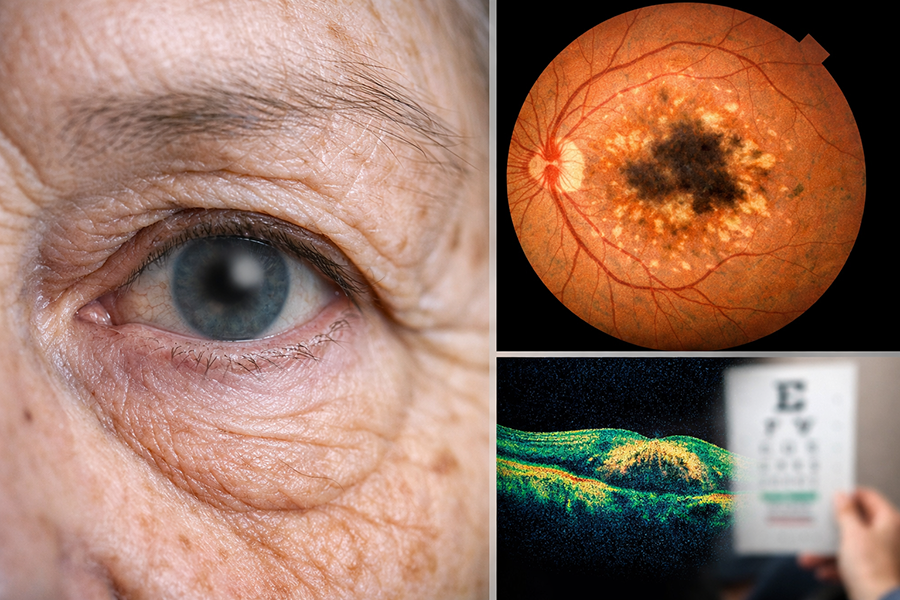
Age-related macular degeneration: a key condition affecting eye health
Age-related macular degeneration (AMD) is one of the leading causes of vision loss in adults, directly affecting the macula, the central area of the retina responsible for sharp, detailed vision. This function is essential for everyday activities such as reading, driving or recognising faces.
A highly prevalent condition
Macular degeneration is highly prevalent in clinical ophthalmology practice. Its impact on patients’ quality of life makes it a priority within the field of eye health, particularly due to its progressive nature and, in many cases, its silent progression in the early stages.
There are two main forms of the disease:
- Dry AMD: accounts for the majority of cases and progresses gradually.
- Wet AMD: less common, but progresses more rapidly, associated with the growth of abnormal blood vessels beneath the retina.
Risk factors and prevention
Various factors influence the development of this condition, including genetic predisposition, smoking, high blood pressure and certain lifestyle habits.
Although prevention does not always prevent the condition from developing, it can help to slow its progression. The most important recommendations include:
- Maintaining a balanced diet rich in antioxidants
- Avoiding tobacco use
- Managing cardiovascular risk factors
- Having regular eye examinations
Innovation in diagnosis and treatment
Advances in ophthalmic technology have significantly improved early detection. Techniques such as optical coherence tomography (OCT) facilitate detailed analysis of the retina, enabling the identification of abnormalities even in the early stages.
As for treatment, particularly for wet AMD, intravitreal therapies using anti-angiogenic drugs have brought about a significant change, as they help to slow the progression of the disease and preserve vision in a high percentage of patients.
Early detection: key to preserving vision
Early detection remains one of the cornerstones of the approach to macular degeneration. Symptoms such as distorted vision, difficulty focusing or the appearance of a central spot require immediate assessment by an ophthalmologist.
Commitment to excellence in eye care
At INOF, we promote a comprehensive approach based on prevention, advanced diagnosis and personalised treatments, with the aim of offering patients the best solutions to preserve their eyesight.